Episode 131: Sweet Fanny Adams

On a warm summer afternoon in 1867, eight-year-old Fanny Adams set off from her home in the quiet Hampshire town of Alton with two other little girls. It was the sort of day that seemed made for adventure: golden fields, open meadows, and the freedom of childhood. But by nightfall, the town would be reeling from one of the most horrific crimes ever committed in Victorian England. And Fanny’s name—so innocent in life—would echo through history, twisted by slang and dark humour into something altogether different.

In this week’s episode of Historical True Crime, we revisit the murder of Fanny Adams, a case that left an entire nation stunned and grieving. The details are not for the faint of heart: abduction, mutilation, and a level of violence that seemed almost impossible in a time and place so seemingly safe. Her killer, a solicitor’s clerk named Frederick Baker, was arrested the very same evening. The evidence—bloody clothing, inconsistent alibis, and a chilling diary entry—mounted quickly, and by December, Baker stood trial.
He claimed insanity, and his lawyer painted a picture of hereditary madness and emotional instability. But the jury needed just 15 minutes to reach a verdict: guilty. On Christmas Eve of 1867, Baker was publicly hanged in front of 5,000 spectators outside Winchester Prison. It would be one of the last public executions held there.

Fanny’s grave still stands in Alton Cemetery, her headstone erected by public donation. It bears a poignant scripture from Matthew: "Fear not them which kill the body, but are not able to kill the soul."
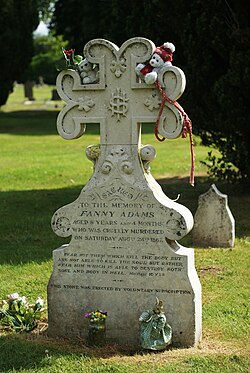
But while the town grieved, a new chapter in the story of Fanny Adams was beginning—one that had little to do with justice or memory. Just two years later, British sailors, unimpressed with their new rations of tinned mutton, jokingly suggested the meat resembled the remains of "poor little Fanny Adams." The phrase stuck. Over time, “Fanny Adams” came to mean worthless stew… then anything worthless… and finally, in its modern form: “Sweet Fanny Adams,” a euphemism for nothing at all.
It’s a chilling evolution—from child victim to slang for disappointment. And yet, it reminds us how language can carry history, even when the true story is long forgotten.
This episode is more than just a retelling of a terrible crime. It’s a reflection on how we remember—or fail to remember—the victims of violence, and how society processes grief through headlines, trials, and even dark humour. It’s a look back at a little girl whose name still lingers in our language, but whose story deserves to be told fully—and with care.
🎧 Listen to the full episode now on Spotify, Apple Podcasts, or wherever you get your shows.


Comments