Episode 130: Who Put Bella in the Wych Elm

In the spring of 1943, four boys were sneaking through the tangled woods near Hagley, Worcestershire, when they stumbled upon something chilling: a human skull nestled inside the hollow of a wych elm tree. It was an unnerving discovery that would spark one of England’s most enduring murder mysteries.

Authorities soon uncovered the nearly complete skeleton of a woman, along with scraps of clothing, a shoe, and a gold wedding ring. Curiously, her hand had been severed and was found buried nearby. Forensic pathologist Professor James Webster determined the woman had likely died around October 1941, and was placed inside the tree while her body was still warm—before rigor mortis could set in. A piece of taffeta fabric was found lodged deep in her throat, suggesting she had been suffocated.
Despite distinctive dental features—including overlapping front teeth—and widespread efforts to identify her, the mystery woman remained nameless. That is, until the graffiti appeared.
In 1944, cryptic messages began appearing across Birmingham and the surrounding area: Who put Bella down the Wych Elm? The name “Bella” took hold, and ever since, the unidentified woman in the tree has been known by that name. But who she was—and who put her there—remains a mystery to this day.
Over the decades, theories have swirled. Was Bella a refugee hiding from air raids during the Blitz? A sex worker targeted by a violent client? A victim of a black magic ritual, as folklorist Margaret Murray once suggested? Or—most tantalizing of all—was she a Nazi spy?
One thread points to Clara Bäuerle, a German cabaret singer and actress who vanished from public life in 1941. Captured German spy Josef Jakobs was found with a photo of her, claiming she had planned to parachute into the West Midlands as part of a spy mission. But Clara’s death certificate, discovered years later, listed her cause of death as Veronal poisoning in Berlin in 1942. Still, doubts linger—especially for those who don’t trust wartime Nazi death records.
In more recent years, forensic anthropologists at Liverpool John Moores University used photographs of Bella’s skull to create a digital facial reconstruction, offering a haunting glimpse of what she may have looked like. Yet her remains—once held by Professor Webster—have since disappeared, meaning modern DNA testing is impossible… for now.
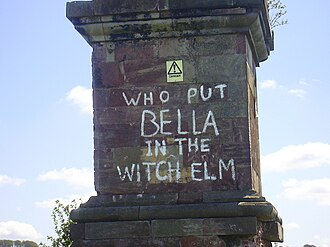
More than 80 years after her death, Bella's story continues to echo. Graffiti referencing her case still appears. In 2016, someone hung a cardboard sign on the fence surrounding Hagley Wood asking, again: Who put Bella in the Wych Elm?
It's a question no one has yet answered—but many are still asking.


Comments